
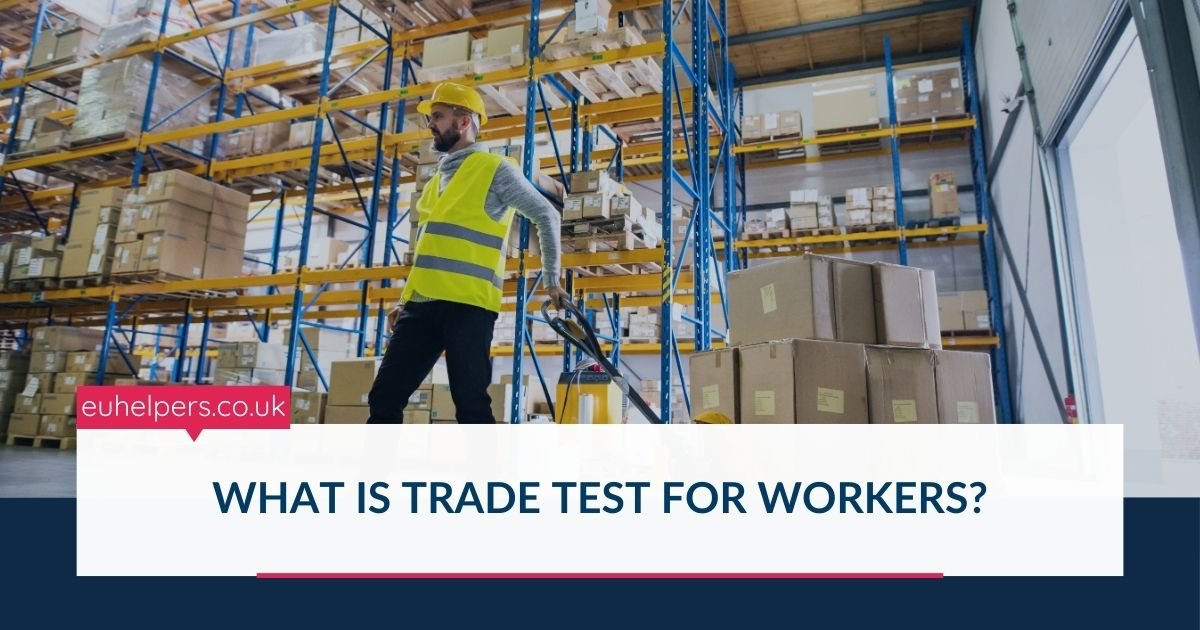
A trade test is a practical skills assessment used to check whether a worker can perform a specific job according to industry standards. It is commonly required for skilled and semi-skilled jobs, especially in construction, manufacturing, mechanical, and technical fields.
Trade tests focus on what a worker can do, not just what certificates they hold.
Why Are Trade Tests Required?
Employers and immigration authorities use trade tests to:
-
Verify real, hands-on skills
-
Ensure workplace safety and quality standards
-
Reduce training time for employers
-
Confirm that foreign workers meet local job requirements
In many countries, trade tests are mandatory before issuing a work permit or job contract.
Which Jobs Usually Require a Trade Test?
Trade tests are commonly required for roles such as:
-
Electricians
-
Plumbers
-
Welders
-
Carpenters
-
Masons
-
Fitters and fabricators
-
Mechanics and technicians
-
Factory and industrial workers
Not all jobs require a trade test, but skilled manual jobs often do.
What Does a Trade Test Include?
A trade test usually includes practical tasks, such as:
-
Using tools and equipment correctly
-
Completing job-related tasks within a time limit
-
Following safety procedures
-
Demonstrating accuracy and workmanship
Some trade tests may also include basic oral or written questions, but the main focus is practical ability.
Where Is the Trade Test Conducted?
Trade tests can be conducted at:
-
Approved trade test centers
-
Employer facilities
-
Government-recognized skill assessment centers
-
Vocational institutes
In some cases, the test may be conducted before visa approval or after arrival, depending on the country.
Is a Trade Test Mandatory for Working in Europe?
It depends on the country and job type.
-
Some European employers require a trade test before hiring
-
Others accept experience certificates and conduct an on-site assessment
-
For shortage occupations, trade tests may replace formal education
Countries like Germany, Poland, Czech Republic, Slovakia, and Hungary often rely on skill assessments for trade workers.
What Documents Are Needed for a Trade Test?
Typical requirements include:
-
Valid passport
-
Job offer or employer reference
-
Proof of work experience (if available)
-
Trade test registration form
Formal education certificates may not always be mandatory.
What Happens If a Worker Fails a Trade Test?
If a worker fails:
-
They may be allowed to retake the test
-
Employers may offer basic training and re-assessment
-
The job offer may be delayed or withdrawn
Failing a trade test does not usually affect future visa applications.
Is a Trade Test the Same as a Skill Certificate?
No.
-
A trade test checks practical ability at the time of hiring
-
A skill certificate proves past training or education
Many employers prefer trade tests because they show real-world skills.
How EUHelpers Supports Workers With Trade Tests
EUHelpers helps workers by:
-
Explaining whether a trade test is required
-
Preparing candidates for practical assessments
-
Connecting workers with verified employers
-
Reducing confusion around documentation and hiring steps
This ensures workers understand expectations before applying.
Frequently Asked Questions (FAQs)
Is a trade test compulsory for all workers?
No. It is mainly required for skilled and technical jobs.
Is a trade test difficult?
It tests basic job skills, not advanced theory.
Can I work without passing a trade test?
Only if the employer or country does not require one.
Does a trade test replace experience certificates?
In many cases, yes.