
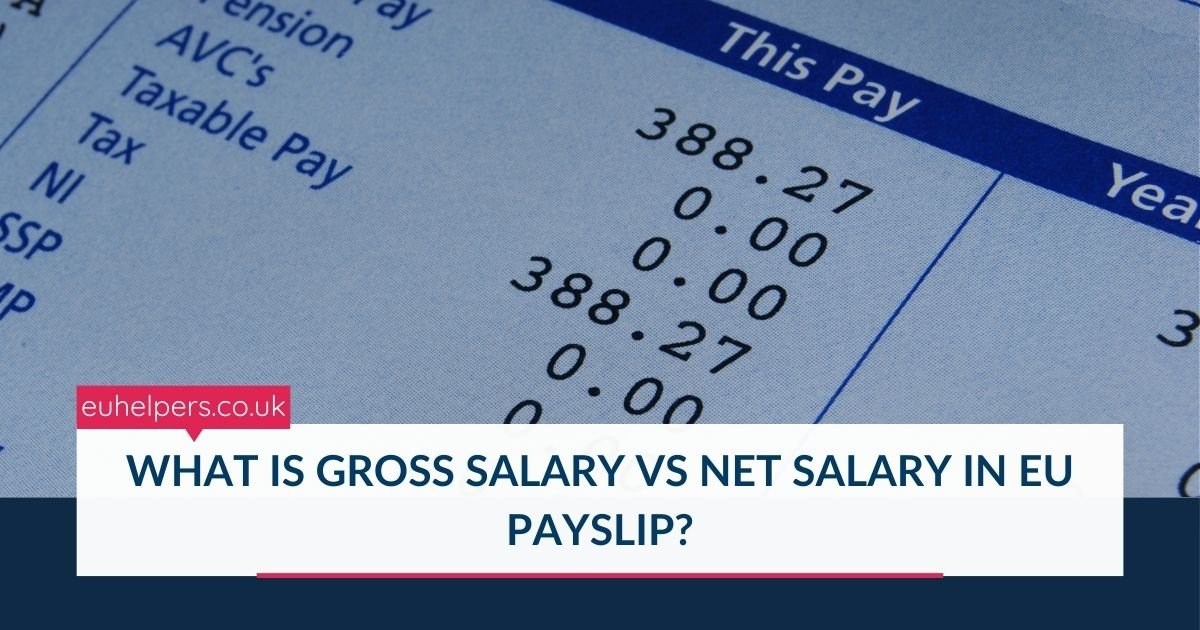
If you are working in Europe, your payslip will usually show two important amounts:
-
Gross salary
-
Net salary
Many foreign workers feel confused when the net amount is much lower than the gross amount. This guide explains the difference in simple, clear language.
What Is Gross Salary?
Gross salary is your total salary before any deductions.
It is the amount agreed in your employment contract.
Gross salary includes:
-
Basic salary
-
Overtime payments
-
Bonuses
-
Holiday allowance (if applicable)
-
13th month salary (in some countries)
This is the salary employers usually advertise in job offers.
What Is Net Salary?
Net salary is the amount you actually receive in your bank account.
It is calculated after deductions such as:
-
Income tax
-
Social security contributions
-
Pension contributions
-
Health insurance
-
Unemployment insurance
Net salary is also called:
-
Take-home pay
-
Salary after tax
Why Is There a Big Difference Between Gross and Net?
European countries have strong social protection systems. Employees contribute to:
-
Public healthcare
-
Pension systems
-
Unemployment benefits
-
Disability benefits
-
Family benefits
Because of these deductions, net salary can be 20%–45% lower than gross salary depending on:
-
Country
-
Salary level
-
Marital status
-
Number of children
-
Tax class
Example Calculation
If your gross salary is €3,000 per month:
-
Income tax: €400
-
Social security: €500
-
Health insurance: €200
Total deductions: €1,100
Your net salary = €1,900
This is just an example. Each country calculates differently.
How It Works in Different EU Countries
Germany
In Germany, deductions depend on tax class, church tax, and social contributions. Social security is shared between employer and employee.
France
In France, payslips show detailed contributions for healthcare, pension, and unemployment insurance. Deductions can be significant but include strong benefits.
Poland
In Poland, employees pay income tax and social insurance (ZUS). Net salary depends on tax thresholds.
Spain
In Spain, deductions include income tax (IRPF) and social security contributions.
Italy
In Italy, gross salary includes mandatory social security contributions and progressive income tax.
What Is Employer Contribution?
Important: Employers also pay additional contributions on top of your gross salary.
For example:
If your gross salary is €3,000, the employer may actually spend €3,600–€4,000 including employer taxes.
This amount is not shown in your net salary but is part of total employment cost.
Which Salary Is Used for Visa Applications?
For work permits and visa extensions in Europe:
-
Authorities usually check gross salary
-
It must meet minimum salary thresholds
-
EU Blue Card requirements are based on gross annual salary
Net salary is not normally used for eligibility checks.
Why Is Understanding Gross vs Net Important?
You should understand this difference because:
-
Job offers show gross salary
-
Rent and daily expenses depend on net salary
-
Tax planning depends on deductions
-
Visa eligibility depends on gross income
Always ask:
“What will be my net monthly salary?”
Frequently Asked Questions
Is gross salary the same as annual salary?
Usually yes. Contracts often show annual gross salary.
Can net salary change?
Yes. It may change due to tax class, bonuses, or law changes.
Do part-time workers have deductions?
Yes, but amounts are proportional.
Is net salary enough to calculate living costs?
Yes. Net salary is what you actually receive.
Final Summary
-
Gross salary = Total salary before deductions
-
Net salary = Salary after tax and social contributions
-
Visa and work permits use gross salary
-
Daily expenses depend on net salary
Understanding your EU payslip helps you manage your finances and avoid confusion when working in Europe.