
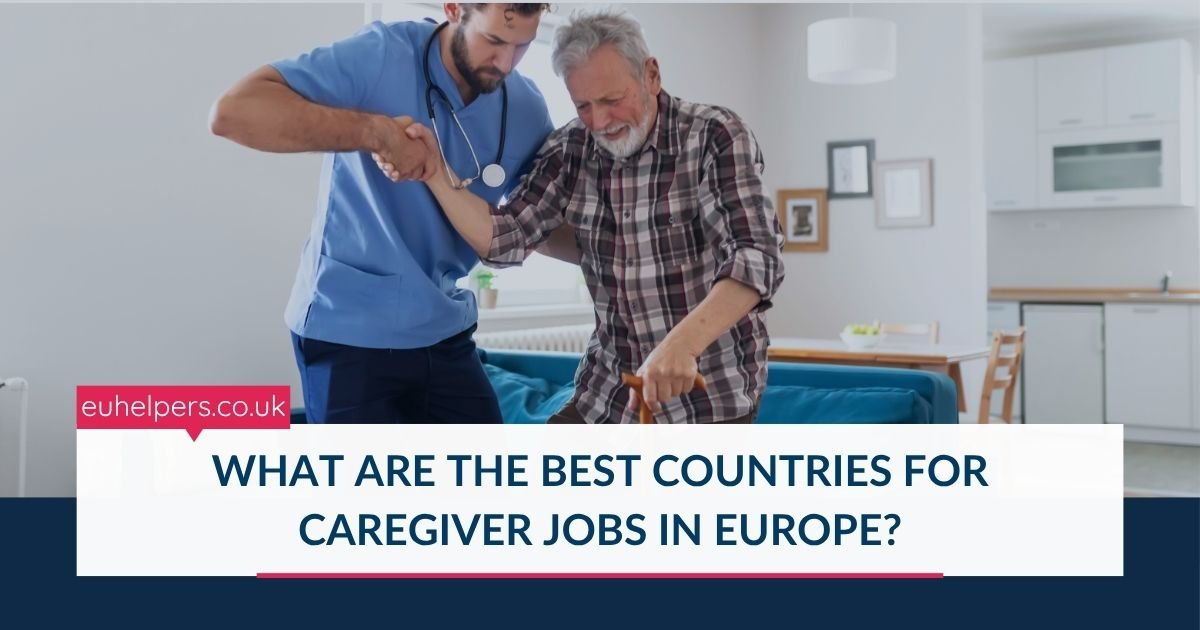
If you are asking about the best countries for caregiver jobs in Europe as a foreign worker, you are researching one of the continent's most urgently needed, most consistently available, and most genuinely important employment categories. Europe is in the middle of a demographic transformation that is reshaping its entire approach to workforce planning, healthcare, and elderly care. An aging population, declining birth rates, and the retirement of the baby boom generation have created a structural deficit of caregivers across virtually every European country — a deficit that is growing every year and that domestic workforces simply cannot fill.
Germany is estimated to need hundreds of thousands of additional caregivers by 2030. Many facilities already struggle to maintain adequate staff levels. The German government has created immigration pathways specifically for healthcare workers, making it easier for qualified foreigners to apply. Healthcare jobs are among the most secure careers in Europe. Even during economic downturns, the demand for caregivers remains strong.
The European caregiving market is growing rapidly. The population is aging and the demand for qualified staff is steadily rising. Working as a caregiver provides not only financial stability but also the satisfaction of helping others. With regular assignments, many caregivers manage to earn €25,000 to €35,000 net annually.
Caregiver work in Europe is not simply a job — it is a genuinely important and deeply human profession that is increasingly valued, increasingly well-compensated, and increasingly accessible to qualified non-EU foreign workers through structured legal immigration pathways. This guide gives you everything you need — the best European countries for caregiver employment ranked and compared, the types of caregiver roles available, realistic salary expectations, the language and qualification requirements, the work permit process, required documents, and how EU Helpers can connect you with a verified European care employer and guide you through every stage completely free of charge.
Why Europe Urgently Needs Foreign Caregivers
Understanding the structural drivers of Europe's caregiver shortage helps you approach your application with confidence and a realistic sense of your value to European employers.
Germany has one of the fastest-growing elderly populations in Europe. According to government statistics, nearly 22% of Germany's population is aged 65 or above, and this percentage is expected to rise. The demand for nursing staff, elderly care assistants, and home caregivers has skyrocketed. As a result, employers increasingly recruit internationally. Countries in Africa, Asia, Eastern Europe, and Latin America are now key sources of healthcare workers.
This pattern repeats across Europe. Austria, the Netherlands, Norway, Finland, Ireland, Italy, and virtually every other European country face the same convergence of demographic factors — an aging population, rising elderly care needs, and a domestic workforce that is itself aging and not being replaced quickly enough by younger workers entering the care sector. The result is a genuine, sustained, and growing demand for qualified foreign caregivers that European governments have actively responded to by creating specific immigration pathways.
European employers are actively seeking qualified and skilled caregivers. The demand for care services continues to grow with aging populations. Many European countries are actively inviting foreign workers to fill critical roles.
Types of Caregiver Jobs Available in Europe
Elderly Care Worker (Nursing Home)
Nursing home or residential care home workers provide daily personal care and support to elderly residents in institutional settings. Tasks include assisting with personal hygiene, dressing, bathing, and grooming, serving meals and assisting with eating, administering prescribed medications under nursing supervision, monitoring residents' health and reporting changes to nursing staff, organizing and participating in recreational activities with residents, maintaining accurate care records, and providing emotional support and companionship.
Nursing home care work provides more structured working hours than live-in home care — typically eight-hour shifts across a rotating schedule including some weekends and public holidays. Social insurance benefits, paid leave, and defined working hours make nursing home positions particularly well-suited for workers seeking long-term stable employment in Europe.
Live-In Home Caregiver
Live-in caregiving is common in Germany and often offers free accommodation and meals. This role involves living in a client's home and providing full-time assistance.
Live-in home caregivers reside in the private home of their elderly client and provide round-the-clock care and support. They assist with all activities of daily living — getting up and going to bed, bathing, dressing, eating, medication management, mobility, and toileting — as well as household maintenance including cooking, cleaning, shopping, and laundry. Many live-in caregivers also provide companionship, social engagement, and emotional support that is critically important for isolated elderly clients.
This may include assistance with day-to-day duties including getting up, going to bed, sitting, walking, dressing, assisting with eating, taking medicine, personal hygiene, taking showers, going to the toilet, meal preparation, and shopping for the patient. Spending leisure time with the patient including reading and going for walks, and maintaining household chores are part of the duties.
The live-in model is particularly prevalent in Germany and Austria, where many families prefer home-based care for their elderly relatives over institutional care. Live-in caregivers receive free accommodation and meals, which means their net earnings represent largely pure savings.
Home Care Assistant (Visiting)
Visiting home care assistants travel between multiple clients throughout the day, spending a set number of hours with each client providing personal care, medication support, meal preparation, and companionship. This model provides more varied daily work than live-in care, a more structured schedule, and the ability to interact with multiple clients and their families. Visiting home care is the dominant model in Ireland, the Netherlands, and the Nordic countries.
Care Home Support Worker
Care home support workers assist qualified nursing staff in residential and nursing homes with a wider range of duties than basic elderly care, including monitoring vital signs, supporting rehabilitation activities, assisting with clinical procedures under nurse supervision, and maintaining clinical documentation. This role bridges general care work and qualified nursing and is a common advancement path for caregivers who develop their skills and knowledge over time.
Disability Support Worker
These caregivers support people with physical or intellectual disabilities.
Disability support workers assist children and adults with physical disabilities, intellectual disabilities, autism spectrum conditions, and mental health challenges in residential facilities, supported living environments, day centers, and private homes. This category requires strong patience, adaptability, and communication skills, but formal medical training is not typically required for entry-level positions.
Dementia and Memory Care Specialist
Specialized caregivers, such as those trained in palliative care, disability support, or dementia care, tend to earn higher wages.
Dementia care specialists work with elderly clients in the advanced stages of Alzheimer's disease and other forms of dementia, requiring specific knowledge of dementia progression, behavioral management techniques, communication strategies for non-verbal clients, and safety protocols for clients with wandering and disorientation. Specialized dementia training and certification significantly increases both employability and salary.
Palliative and End-of-Life Care
Palliative care workers support terminally ill patients and their families through the end-of-life period, providing comfort-focused care, pain management support, emotional and psychological support, and practical assistance with daily needs. This is among the most emotionally demanding but also most meaningful categories of care work, and specialized palliative care training commands premium salaries.
The Best Countries in Europe for Caregiver Jobs
Germany — Europe's Largest Caregiver Market
Germany has long been the most common destination for caregiving jobs. Caregiver salaries in Germany range between €1,500 and €3,000 net per month. Additionally, many job offers include free accommodation and meals, as well as holiday bonuses and supplements for nighttime or weekend work.
Germany is by far the largest European market for caregiver employment, with hundreds of thousands of vacancies at any given time across nursing homes, home care agencies, hospitals, rehabilitation centers, and private households. Germany's specifically constructed healthcare worker immigration pathway — with German language support programs, credential recognition assistance, and structured entry routes — makes it one of the most accessible European destinations for foreign caregivers who meet the language requirements.
The primary requirement that distinguishes Germany from other markets is the German language. At least B1-level German is required for communication with patients and staff. For caregivers who invest in achieving B1 or B2 German proficiency, Germany offers the best combination of job volume, salary level, career development opportunities, and pathway to long-term residence and citizenship.
Austria — High Wages and Strong Worker Protections
In Austria, the average earnings of a caregiver range from €1,800 to €2,800 net per month, depending on experience, level of German language proficiency, and the region where the job is located. Caregivers are employed both by private families and agencies. In Austria, supplementary pay is often offered for working on holidays, overtime, and loyalty bonuses. Employers very often provide accommodation and meals, enabling caregivers to save significantly on living costs.
To become a caregiver in Austria, one can apply for a Red-White-Red Card for Skilled Workers in Shortage Occupations if one has completed professional training as a registered caregiver. German language proficiency is equally important for registration in the health professional register. Austria is one of the highest paying countries for caregivers in Europe.
Austria's care sector is characterized by strong regulatory standards, excellent working conditions, and generous social benefits. The Red-White-Red Card system specifically lists nursing and care professions as shortage occupations, providing a streamlined immigration pathway for qualified foreign caregivers.
Norway — The Highest Salaries in Europe
Norway offers some of the highest pay in the caregiving sector. A senior caregiver in Norway can expect NOK 30,000 to 37,000 net per month, which translates to approximately €2,700 to €3,200 net. Norwegian institutions place strong emphasis on the quality of care, so candidates are typically required to know Norwegian at minimum level A2 or B1 and have verified qualifications. In exchange, they offer high salaries, good social benefits, access to training, and legal employment with a full benefits package.
Norway consistently offers the highest caregiver wages in Europe. For qualified caregivers who are willing to invest in learning Norwegian and who have relevant professional qualifications, Norway represents the most financially rewarding European destination. Living costs in Norway are also the highest in Europe, but the net savings potential for caregivers with employer-provided accommodation remains excellent.
Netherlands — Accessible English-Friendly Environment
The Netherlands offers high salaries to caregivers as part of a comprehensive healthcare system which is aimed at attracting and retaining skilled professionals. The average annual salary for caregivers is approximately $33,804.
The Netherlands has one of Europe's most comprehensive and well-funded long-term care systems, with significant investment in both institutional care and home-based care services. A large and growing proportion of Dutch care employers operate with English as an accessible working language, particularly in major cities, making the Netherlands one of the most linguistically accessible European care markets for workers from English-speaking backgrounds.
Ireland — Strong Demand and English-Language Environment
Ireland is considered one of the best countries for caregivers because of its highly advanced healthcare system, strong worker protections, and a supportive legal framework. Caregivers can benefit from fair wages and accessible training programs. The average annual salary is approximately $34,294.
Ireland is the most accessible European country for English-speaking caregivers. The Irish care sector has experienced significant labor shortages, and Ireland's Critical Skills Employment Permit and General Employment Permit pathways both accommodate care worker immigration. The Health Service Executive, private nursing homes, home care agencies, and disability services all actively recruit from abroad. Irish salaries for caregivers typically range from €24,000 to €30,000 per year, and Ireland's English-language environment removes the language barrier that exists in Germany, Austria, and the Netherlands.
Finland — Excellent Work-Life Balance and Strong Benefits
Finland is an ideal choice for caregivers as it promises high-quality healthcare services, extensive social support programs, and a great work-life balance. Finland is one of the highest paying countries for caregivers. The average annual salary is approximately $35,258.
Finland has an acute caregiver shortage driven by rapid demographic aging and strong social services traditions that create high per-capita demand for formal care services. Finnish working culture — emphasizing professional autonomy, mutual respect between healthcare workers and management, and genuine work-life balance — is consistently rated among the most positive in Europe for healthcare workers. Finnish language requirements are a barrier for many applicants, but English-language roles are increasingly available in larger Finnish healthcare organizations.
Italy — Growing Market with High Demand
Italy is facing a shortage of caregivers owing to low birth rates and young adults leaving for economic opportunities abroad. With a huge elderly population, the burden on caregivers is overwhelming.
Italy has one of Europe's oldest populations and one of its largest per-capita elderly care demands. The Italian care market has traditionally relied heavily on migrant caregivers — particularly from the Philippines, Eastern Europe, and South America — and is one of the most internationally oriented care labor markets in Europe. Live-in elderly care in Italian private households is particularly common, with caregivers typically receiving accommodation and meals alongside their salary.
Key Caregiver Salary Comparison — Europe
| Country | Monthly Net Salary | Accommodation | Language Required | Permit Type | Processing Time |
|---|---|---|---|---|---|
| Norway | €2,700 – €3,200 | Sometimes provided | Norwegian A2/B1 | Skilled Worker Permit | 2–3 months |
| Austria | €1,800 – €2,800 | Often provided | German B1/B2 | Red-White-Red Card | 6–10 weeks |
| Germany | €1,500 – €3,000 | Often provided | German B1/B2 | Skilled Worker Visa | 8–12 weeks |
| Finland | €1,800 – €2,400 | Sometimes | Finnish/English | Residence Permit | 2–3 months |
| Netherlands | €1,600 – €2,400 | Sometimes | Dutch/English | Single Permit (GVVA) | 3–4 months |
| Ireland | €1,600 – €2,200 | Sometimes | English (fluent) | Employment Permit | 6–12 weeks |
| Denmark | €1,900 – €2,500 | Sometimes | Danish/English | Positive List Permit | 2–3 months |
| Italy | €1,000 – €1,600 | Often provided (live-in) | Italian/English | Single Permit | 2–3 months |
Requirements for Caregiver Jobs in Europe
Language Requirements
Language proficiency is the single most variable and often most significant requirement across European caregiver markets. For non-German-speaking European countries, the requirement varies:
For non-English-speaking countries like Germany, Austria, and the Netherlands, employers require caregivers to have at least a B1-B2 level proficiency in the local language. In English-speaking countries such as the UK and Ireland, a strong command of English is essential.
For Germany and Austria, German language at B1 level is the standard minimum requirement, with B2 required for more senior care roles and qualification recognition. German language study is a genuine investment — B1 typically requires six to twelve months of consistent study — but the financial return in terms of German and Austrian caregiver wages makes this investment enormously worthwhile for committed applicants.
Qualifications and Training
Employers in Europe prefer candidates with formal training in healthcare or social care. In Germany, vocational training programs like Altenpfleger — geriatric nurse — are standard requirements. While some entry-level caregiving roles offer on-the-job training, possessing certifications from recognized institutions increases employability.
For entry-level care assistant and home care aide positions, formal qualifications are helpful but not strictly mandatory in all countries — demonstrated experience and personal qualities matter significantly. For more senior care worker, qualified nursing assistant, and care coordinator roles, formal healthcare qualifications and in many countries their official recognition by the national health authority are required.
Experience
Proof of experience is usually one to two years minimum for most European care positions with visa sponsorship.
Prior care experience — whether in professional settings such as nursing homes, hospitals, or care agencies, or in informal settings caring for family members — strengthens your application significantly. For entry-level positions, volunteer care experience at hospitals or elderly care centers counts and is worth building into your preparation if you do not yet have paid experience.
Personal Qualities
European employers value specific personal attributes that make caregivers effective and compassionate. The most sought-after qualities include empathy and compassion — the ability to understand and share the feelings of patients — patience, many care recipients have complex needs that require a calm and patient approach, and adaptability — different patients have different needs, and being flexible in care routines is essential.
Good physical and mental health is also important, as care work can be physically demanding — involving regular lifting and supporting of clients with mobility difficulties — and emotionally challenging, particularly when working with clients with dementia, terminal illness, or profound disabilities.
Step-by-Step Process: How to Get a Caregiver Job in Europe
Step One — Assess Your Language Readiness
Before anything else, honestly assess your current language skills for your target country. If you are targeting Germany or Austria, where German B1 is the standard minimum, and you do not yet have this level, your most productive first step is enrolling in a German language course. Language preparation is the single most impactful investment you can make in your European caregiver career.
If you are targeting Ireland or the Netherlands with strong English, you may be ready to begin the job search and application process immediately.
Step Two — Gather and Prepare Your Qualifications
Collect all relevant care qualifications, training certificates, first aid certifications, medication administration training, and professional licenses. Have these documents officially translated into German, Dutch, or English depending on your target country by a certified translator. For countries requiring formal qualification recognition — Germany, Austria — begin the recognition process early, as it can take several weeks.
Step Three — Apply Through EU Helpers
Visit https://euhelpers.com/jobs-in-europe to browse all current caregiver job listings across European countries. Every care employer on the EU Helpers platform is legally registered, authorized to hire non-EU workers, and has a confirmed vacancy. Each listing clearly states the specific care role, the care setting, the country and region, the language requirements, the salary and benefits, accommodation arrangements, and the work permit pathway.
Step Four — Employer Interview
Care employers across Europe conduct video interviews with international candidates before making formal offers. Prepare to describe your care experience in detail, demonstrate your language skills at the required level, explain your approach to common caregiving challenges, and show your personal qualities of empathy, patience, and reliability.
Step Five — Qualification Recognition Where Required
For Germany and Austria, if your care qualifications are from outside the EU, the formal recognition process through the relevant national authority — in Germany, the relevant state health authority — must be completed before the Skilled Worker Visa can be issued. EU Helpers advises all candidates on the specific recognition requirements for their qualifications and target country.
Step Six — Employer Applies for Work Authorization
Once the job offer is confirmed and qualifications are recognized, your employer applies for work authorization through the relevant national labor authority. EU Helpers coordinates this stage with employers to ensure complete and timely submission.
Step Seven — Apply for Your Work Visa
Apply for your work visa at the embassy or consulate of the host country in your home country. Processing times range from six to twelve weeks for Germany, two to three months for Austria, and one to three months for most other European countries.
Step Eight — Arrive and Register
Travel once your visa is approved. Register your address with the local municipal authority within the required period. Your employer registers you with the national social insurance system from your first day of work.
Required Documents for a European Caregiver Visa Application
While requirements vary, most European countries have similar visa criteria for care workers: valid job offer from an approved healthcare employer, relevant qualifications — degree, diploma, or certification in healthcare, language proficiency — English, German, or local language, proof of experience — usually one to two years minimum, clean background check and medical fitness certificate.
The standard document package includes a valid passport with at least twelve months of remaining validity, a signed employment contract from the European care employer, all relevant care qualifications and training certificates with official translations, language proficiency certificate at the required level, a clean criminal record certificate from your country of citizenship issued within the past three months, a medical fitness certificate confirming you are physically and mentally suitable for care work, proof of accommodation arrangements, health insurance documentation for your initial period, recent passport-sized photographs, and the completed visa application form.
Worker Rights and Benefits for Caregivers in Europe
All legally employed caregivers in EU countries are entitled to the full protection of national labor law, providing the same rights as local workers in equivalent roles.
Social insurance is covered by the employer. Health insurance is valid throughout the EU. After the first year of employment, caregivers are entitled to one month of leave. If working in shifts, typically three months working followed by one month off is common.
Paid annual leave of at minimum 20 working days per year is legally guaranteed across all EU countries. Sick pay provisions are provided through social insurance enrollment. Health insurance is mandatory from the first day of legal employment. Pension contributions build a retirement entitlement from the first month. Overtime and weekend work attract premium pay rates under national labor law.
For live-in caregivers, accommodation and meals are provided, and the conditions of this accommodation are regulated — it must meet standards for adequate housing and any deduction for accommodation must be proportionate to the worker's salary.
Career Development from Caregiver Work in Europe
With further education and improved German language skills, many care assistants move into nursing roles that offer higher salaries and greater responsibilities.
Caregiving is a career with growth opportunities, and European employers appreciate candidates who show a willingness to learn. Many companies offer training programs and workshops to help caregivers advance in their careers. Consider upskilling in specialized caregiving areas such as elderly dementia care, palliative care, or rehabilitation support. Caregivers who pursue further education — such as diplomas in nursing or healthcare — can transition into higher-paying roles like senior healthcare assistants or registered nurses.
European care employers consistently invest in the professional development of their care staff, with funded training programs, language support, and tuition assistance for further qualifications. Caregivers who demonstrate commitment, develop language skills, and pursue additional qualifications advance quickly within the European care sector.
How to Apply Through EU Helpers
EU Helpers is your most reliable and safest partner for finding verified, employer-sponsored caregiver jobs across Europe. Every care employer on the EU Helpers platform is legally registered, authorized to hire non-EU workers, and has a confirmed vacancy before the listing is published.
Visit https://euhelpers.com/jobs-in-europe to browse all current caregiver job listings across Germany, Austria, the Netherlands, Ireland, Norway, Finland, and other European countries. Filter by country, care setting, language requirement, salary level, and accommodation provision.
Submit your application with your CV, care qualifications, and language certificates. The EU Helpers team reviews every application and contacts shortlisted candidates within five to seven business days. From there, the team coordinates your employer interview, advises on qualification recognition, supports the employer through the work permit process, and guides you through every step to arrival and your first day of work.
The complete EU Helpers service for all job seekers is entirely free of charge. All recruitment costs are borne by the employer. There are no placement fees, no processing charges, and no obligations of any kind until you accept a verified job offer.
Conclusion
The European caregiving market is growing rapidly. The population is aging and the demand for qualified staff is steadily rising. Working as a caregiver provides not only financial stability but also the satisfaction of helping others.
Whether you want to provide live-in elderly care in Germany or Austria, work as a care assistant in an Irish nursing home, support vulnerable people in a Dutch community care setting, or build a specialist dementia care career in Norway, Europe has a real, waiting opportunity for compassionate, qualified caregivers from around the world.
Visit https://euhelpers.com/jobs-in-europe today. Browse caregiver job listings across Europe's top care destinations, apply with confidence, and let EU Helpers guide you from your first application to your first day making a meaningful difference in the lives of European families and their loved ones.
FAQs
1. Which European countries are best for caregiver jobs for foreign workers?
The best European country for caregiver jobs depends on your language skills and qualifications. Germany and Austria offer the largest volume of positions and excellent salaries of €1,500 to €3,000 net per month, but require German language at B1 level minimum. Norway offers the highest caregiver wages in Europe at approximately €2,700 to €3,200 net per month but requires Norwegian language. Ireland is the most accessible market for English-speaking workers with strong demand and competitive pay. The Netherlands offers high wages and an English-friendly environment in many care organizations. Finland offers excellent work-life balance and strong social benefits. For workers willing to invest in German language skills, Germany and Austria consistently offer the best combination of job volume, salary, career development, and pathway to permanent residence.
2. Do caregiver jobs in Europe include free accommodation?
Many European caregiver positions — particularly live-in home care roles in Germany, Austria, and Italy — include free or subsidized accommodation as a standard component of the employment package. For live-in caregivers, free private room, meals, and often internet access are standard benefits, as the caregiver lives in the client's home and must be available around the clock. For nursing home and institutional care positions, free accommodation is less universal but still offered by many employers, particularly those in rural or suburban locations where affordable housing is limited. EU Helpers clearly states whether accommodation is provided, and on what terms, in every caregiver job listing on the platform.
3. What language skills do I need for caregiver jobs in Europe?
Language requirements vary significantly by country. Germany and Austria require German at minimum B1 level for most care positions, with B2 needed for senior care and qualification recognition purposes. Norwegian at A2 or B1 is required for Norwegian care positions. Dutch at B1 level is standard for Netherlands care roles, though English-accessible positions are increasingly available. Ireland requires fluent English as it is the working language of the Irish care system. Finland typically requires Finnish, but English-accessible positions exist in larger healthcare organizations. Italian at B1 level is typically expected for Italian care roles. Language investment is the single most impactful preparation a caregiver candidate can make, as higher language proficiency directly translates to higher salary offers and broader job choice.
4. What qualifications do I need for caregiver jobs in Europe?
Qualification requirements depend on the specific role and country. For entry-level care assistant and home care aide positions, demonstrated care experience and personal suitability are often sufficient, with on-the-job training provided. For senior care worker and qualified nursing assistant roles, formal healthcare or social care qualifications — such as a diploma in health and social care, a nursing assistant certificate, or a certified caregiver course — are required. In Germany, the Altenpfleger qualification for geriatric care nurses is the most recognized credential. For nursing roles, a nursing degree and professional registration are required. If your qualifications are from outside the EU, formal recognition by the national health authority of your target country may be required before you can work in regulated care roles. EU Helpers advises all candidates on their specific qualification status and recognition requirements.
5. How much do caregivers earn in Europe?
Caregiver earnings in Europe vary widely by country and role. Norwegian caregivers earn the most at approximately €2,700 to €3,200 net per month. Austrian caregivers earn €1,800 to €2,800 net per month. German caregivers earn €1,500 to €3,000 net per month. Finnish and Dutch caregivers earn €1,600 to €2,400 net per month. Irish caregivers earn approximately €1,600 to €2,200 net per month. Italian caregivers in live-in roles earn €1,000 to €1,600 per month plus free accommodation and meals. For live-in caregivers across all countries where accommodation and meals are provided, net monthly savings are substantially higher than wage figures alone suggest — a German caregiver earning €1,700 net per month with free accommodation and meals can realistically save €1,200 to €1,400 per month.
6. Can foreign caregivers in Europe bring their families?
Family reunification is available for most non-EU care workers in Europe, subject to permit type and country-specific rules. In Germany, workers on Skilled Worker Visas can apply for family reunification, with spouses receiving independent work rights. In Austria, family members of Red-White-Red Card holders can apply for the Red-White-Red Card Plus, which provides unrestricted labor market access. In Ireland and the Netherlands, family reunification is possible for workers on appropriate employment permits after meeting qualifying residence and income criteria. For live-in caregivers whose accommodation is within the client's home, family members cannot typically live at the workplace, so alternative housing arrangements must be organized for family members joining the primary worker. EU Helpers advises all placed workers on family reunification options specific to their country and permit type.
7. What is the difference between live-in care and nursing home care in Europe?
Live-in care involves a caregiver residing in the private home of an elderly or disabled client and providing full-time around-the-clock support for all activities of daily living, household maintenance, companionship, and care coordination. Live-in care typically provides free accommodation and meals as part of the package, and caregivers usually work rotation schedules of several weeks followed by a rest period at home. Nursing home care involves working shift-based hours in an institutional care facility — typically eight-hour shifts across a rotating schedule — providing personal care and support to multiple residents. Nursing home positions provide more structured working hours, better separation between work and personal time, and full social insurance benefits from the first day. Live-in care often pays more in net savings terms due to free accommodation, while nursing home care provides more regular hours and professional structure.
8. How do I get my care qualifications recognized in Germany or Austria?
For foreign-trained caregivers who want to work in Germany or Austria in regulated care roles, the formal recognition process for their qualifications must be completed before the work visa can be issued. In Germany, the relevant state authority — typically the Landesamt für Gesundheit or equivalent — assesses your qualifications against the German standard for the equivalent German credential. The process typically takes eight to sixteen weeks and may require submission of translated and legalized qualification documents, official verification of your institution's accreditation, and in some cases an adaptation period or knowledge test. Many German employers support the recognition process and may fund language preparation. In Austria, the process is managed by the relevant Gesundheitsberufe-Register. EU Helpers advises all candidates on the recognition pathway for their specific qualifications and target country.
9. Can caregivers in Europe progress to nursing or healthcare management roles?
Yes. Caregiver work in Europe provides a structured foundation for career advancement into qualified nursing and healthcare management. Workers who develop their language skills to B2 level and pursue further training — nursing assistant programs, care coordination courses, or enrolled nursing qualifications — can transition to higher-paying and more senior roles. In Germany, care assistants who complete the three-year Altenpfleger vocational training program qualify as fully registered geriatric nurses with significantly higher earnings and greater professional responsibility. In Ireland, the Health Skills Education and Training program supports care workers in advancing to senior healthcare assistant and nursing roles. European healthcare employers consistently fund and support staff development because retaining experienced care workers is both economically and clinically valuable.
10. Do caregivers in Europe work on weekends and public holidays?
Yes. Care work is a round-the-clock, seven-day-a-week necessity, and caregivers in both nursing home and home care settings work rotating schedules that include weekends and public holidays. Weekend and public holiday work attracts premium pay under labor law in most European countries — typically 1.5 to 2 times the standard hourly rate. For live-in caregivers in rotation models, the rotation period typically includes all days of the week with a regular day off each week. In nursing home settings, the rotating shift system distributes weekend and holiday work evenly across the team. The premium pay for weekend and public holiday work is one of the factors that allows European caregivers to earn significantly more than the base salary figures suggest, particularly in countries with many public holidays and strong union-negotiated overtime agreements.
11. What is the visa pathway for caregivers in Germany specifically?
Germany has several routes through which qualified foreign caregivers can obtain legal employment authorization. The primary pathway for qualified care workers with recognized training is the Skilled Worker Visa for healthcare occupations, which requires qualification recognition and German language at B1 level minimum. Germany also offers a recognition partnership — Anerkennungspartnerschaft — allowing qualified care workers to enter Germany and work while completing their formal recognition process in parallel. The German government's triple win program specifically recruits qualified care workers from partner countries and provides supported language training, recognition assistance, and job placement. For entry-level care assistants who want to train in Germany, the Ausbildung vocational training program — Ausbildung zur Pflegefachkraft — allows foreign workers to train and earn simultaneously. EU Helpers advises all candidates on which German pathway best fits their existing qualifications and language level.
12. Are there caregiver jobs for men in Europe?
Yes. While the care workforce is predominantly female in most European countries, there is no gender restriction on caregiver employment in Europe, and male caregivers are actively sought for specific roles. Male care workers are particularly valued for personal care of male clients, for working with challenging or physically strong clients in disability services, and for certain specialist care settings. In Germany, Austria, the Netherlands, and Ireland, male care workers are welcomed and employed across all care settings. Some live-in care positions in private households specifically request female caregivers for cultural or client preference reasons, but institutional and community care positions are fully gender-equal. EU Helpers lists all relevant information about any gender preferences stated by specific employers in each job listing.
13. How does the EU's aging population crisis create long-term job security for caregivers?
The structural demographic crisis underlying Europe's caregiver shortage is not a temporary situation — it is a long-term trend that will intensify over the next two to three decades. The proportion of Europe's population aged 65 and above is projected to grow from approximately 20% currently to over 30% by 2050. The number of people requiring formal elderly care will grow proportionally, while the number of working-age people to provide that care will decline due to lower birth rates. This mathematical reality means that caregiver positions in Europe are among the most fundamentally secure employment categories available — the demand will not reduce, it will increase. For workers who commit to European care careers, develop language skills, obtain recognized qualifications, and build professional experience in European care systems, the long-term career security is among the strongest of any employment category in the continent.
14. What personal qualities do European care employers most value?
Beyond formal qualifications and language skills, European care employers place enormous value on specific personal qualities that no certificate can fully substitute for. Genuine empathy and compassion for vulnerable people is the foundational quality — the ability to truly care about the wellbeing of clients and to maintain this care consistently through physically and emotionally challenging work. Patience is essential for working with clients who have dementia, profound disabilities, or communication difficulties. Reliability and consistency build the trust that vulnerable people and their families need to feel safe in care relationships. Adaptability to different client needs, care plans, and working environments. Cultural sensitivity and respect for clients' backgrounds and preferences. The ability to maintain professional boundaries while providing genuinely warm, human care. These qualities are assessed in interviews through scenario-based questions and references, and they are the foundation of a successful long-term European care career.
15. How does EU Helpers help me find and apply for caregiver jobs in Europe?
EU Helpers is a completely free-of-charge recruitment platform that connects qualified foreign caregivers with verified European care employers who are legally authorized to hire non-EU workers. Every caregiver job listed on the EU Helpers platform at https://euhelpers.com/jobs-in-europe is a real, current vacancy confirmed by a direct employer mandate, with full details of the care role, setting, country and region, language requirements, salary, accommodation provisions, and work permit pathway. When you apply through EU Helpers, the team assesses your care qualifications and language level, matches you with suitable European care opportunities, coordinates your employer interview, advises on qualification recognition requirements, supports the employer through the work permit application process, and guides you through every step including visa application, arrival, and first day at work. The entire EU Helpers service for all job seekers is completely free — no fees, no charges, and no hidden costs at any stage.