
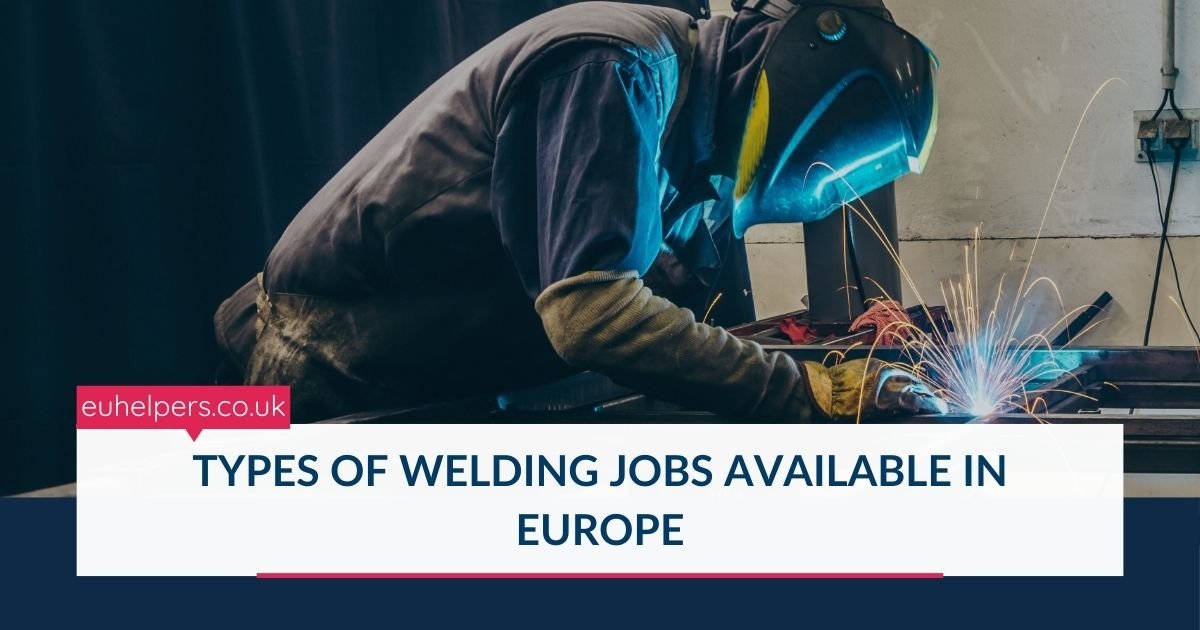
Welding plays a crucial role in a wide range of industries across Europe, from construction and manufacturing to energy and engineering. Skilled welders are in demand for both specialized and general roles, with opportunities available in fabrication, maintenance, inspection, and leadership positions.
Common Welding Roles
MIG Welder:
Specializes in Metal Inert Gas (MIG) welding, typically used in manufacturing and fabrication settings. MIG welding is valued for its efficiency and versatility, making it one of the most widely used techniques.
TIG Welder:
Performs Tungsten Inert Gas (TIG) welding, a method favored for its precision and ability to work with delicate or high-quality materials such as stainless steel and aluminum. TIG welding is common in aerospace, automotive, and high-spec fabrication.
Arc Welder:
Uses arc welding techniques, which include Shielded Metal Arc Welding (SMAW) and Gas Metal Arc Welding (GMAW). Arc welding is adaptable to various environments, including construction and shipbuilding.
Pipeline Welder:
Specializes in welding pipelines for industries such as oil, gas, and water supply. This work often involves high-pressure systems and strict safety standards.
Structural Welder:
Focuses on welding metal components for large-scale structures like bridges, buildings, and industrial frameworks.
Fabricator Welder:
Combines fabrication skills with welding expertise to create and assemble metal components, often working from technical drawings.
Welder-Fabricator:
Similar to a fabricator welder but often involved in more varied projects, requiring versatility with different metals and techniques.
Welding Team Leader:
Manages a team of welders, oversees project timelines, ensures quality control, and coordinates workflow on job sites.
Welding Inspector:
Examines welds to confirm they meet safety, quality, and compliance standards, often working to industry-specific regulations.
Welding Engineer:
Plans, coordinates, and monitors welding processes, focusing on efficiency, quality assurance, and adherence to technical specifications.
Related Fields Where Welding Skills Are Valuable
Skilled Trades:
Welders often work alongside electricians, mechanics, and other tradespeople, especially in large construction and industrial projects.
Fitting and Machining:
Close collaboration with fitters and machinists is common when creating and assembling precise metal components.
Maintenance:
Many industries require welders for the repair and upkeep of machinery, infrastructure, and equipment.
Engineering:
Welding expertise is critical in sectors like mechanical, structural, and manufacturing engineering, where metal fabrication plays a key role.
Bottom line:
In Europe, welding careers are diverse, ranging from hands-on roles like MIG and TIG welding to leadership and inspection positions. Whether you’re working in fabrication, construction, pipelines, or engineering, welding skills open doors to a variety of industries and career paths.