
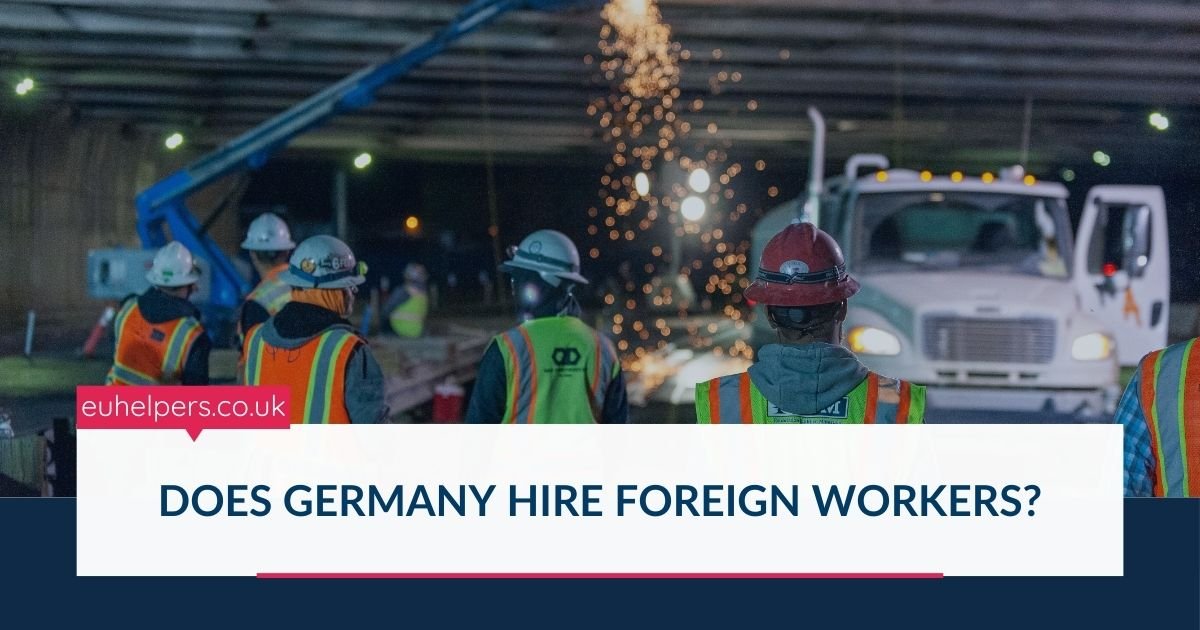
Yes, Germany actively hires foreign workers. Germany is one of the largest employers of international workers in Europe due to a strong economy, aging population, and long-term labor shortages across many sectors.
Germany officially welcomes both skilled and semi-skilled foreign workers through structured and legal work visa programs.
Why Germany Hires Foreign Workers
Germany faces a shortage of workers in multiple industries. Local labor supply is not enough to meet demand, so employers are allowed to recruit workers from outside the European Union.
Main reasons include:
-
Aging population and low birth rate
-
Expansion of healthcare, manufacturing, and infrastructure
-
High demand for technical and vocational workers
-
Government-supported skilled migration policies
What Jobs Are Available for Foreign Workers in Germany?
Germany hires foreign workers across a wide range of sectors.
High-demand job sectors include:
-
Healthcare and nursing
-
Construction and skilled trades
-
Manufacturing and factory work
-
IT and engineering
-
Logistics and warehouse jobs
-
Hospitality and restaurants
-
Cleaning and facility services
-
Agriculture and seasonal work
Both degree holders and workers without university education can find opportunities, depending on the role.
Can Non-EU Citizens Work Legally in Germany?
Yes. Non-EU citizens can work legally in Germany if they have:
-
A valid job offer from a German employer
-
An approved Germany work visa
-
A residence permit after arrival
Germany follows strict labor laws but offers clear legal pathways for foreign employment.
Germany Work Visa Options for Foreign Workers
Common visa options include:
Germany Employment Visa
For regular employment with a confirmed job contract.
EU Blue Card Germany
For highly skilled professionals with recognized degrees and higher salaries.
Skilled Worker Visa
For workers with vocational training or professional diplomas.
Seasonal Work Visa
For short-term agricultural and seasonal jobs.
Each visa has specific requirements based on job type and salary.
Language Requirement for Working in Germany
-
German language is mandatory for many jobs, especially healthcare and skilled trades
-
Basic German level is often required for visa approval
-
Some international and IT roles accept English only
Learning German significantly improves job stability and career growth.
Salary and Worker Rights in Germany
Germany offers some of the best working conditions in Europe:
-
National minimum wage applies
-
Average monthly salary ranges from 2000 to 4500 euros
-
40-hour work week
-
Paid leave and public holidays
-
Full health insurance and social security
Foreign workers have the same labor rights as German citizens.
Can Foreign Workers Settle Permanently in Germany?
Yes. Germany provides a clear settlement pathway:
-
Permanent residence after three to five years
-
Faster settlement for EU Blue Card holders
-
Citizenship possible after long-term legal residence
Family reunification is also allowed under German immigration law.
Final Answer
Yes, Germany hires foreign workers across many industries and skill levels. With a valid job offer and work visa, foreign nationals can legally work, live, and build a long-term future in Germany.
Germany remains one of the most trusted and stable destinations in Europe for foreign workers.