
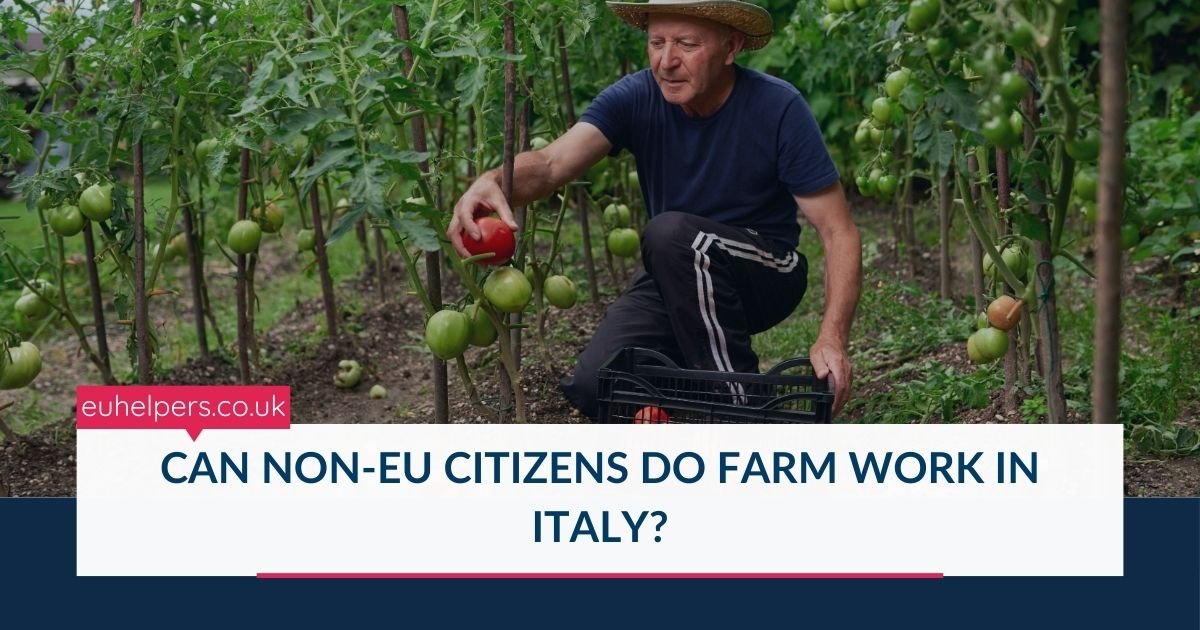
Yes, non-EU citizens can legally do farm and agricultural work in Italy, but only if they have the correct Italian work visa and permit. Farm work without proper authorization is illegal and can lead to serious consequences.
Non-EU Citizens (Work Visa Required)
If you are not a citizen of:
-
The European Union
-
The European Economic Area
-
Switzerland
You must have an Italian work visa and work permit to do farm or agricultural work in Italy.
This applies to workers from countries such as India, Pakistan, Bangladesh, Nepal, Sri Lanka, the Philippines, Nigeria, and other non-European countries.
Seasonal Agricultural Work Visa (Required)
Most farm jobs fall under Italy’s seasonal work visa for agriculture.
Key requirements include:
-
A job offer from an Italian farm or employer
-
Employer-sponsored work authorization (Nulla Osta)
-
Application under Italy’s annual quota system (Decreto Flussi)
-
A National (Type D) Italian work visa
Only after visa approval can the worker enter Italy and begin farm work.
Types of Farm and Agricultural Jobs Allowed
With the correct visa, non-EU citizens may work in:
-
Fruit and vegetable harvesting
-
Vineyard and olive farm work
-
Dairy and livestock farms
-
Greenhouses and nurseries
-
Seasonal planting and harvesting roles
These jobs are usually temporary or seasonal, with contracts lasting a few months.
Working on a Tourist Visa Is Not Allowed
Non-EU citizens cannot do farm work in Italy on:
-
Tourist visas
-
Business visitor visas
-
Visa-free short stays
Even short-term or cash-paid farm work is illegal without a valid work visa.
Illegal work may result in:
-
Immediate removal from Italy
-
Fines and penalties
-
Bans from future Italian and Schengen visas
Employer Sponsorship Is Mandatory
For farm work, the Italian employer is responsible for:
-
Applying for the Nulla Osta
-
Offering a legal employment contract
-
Registering the worker with Italian authorities
Workers cannot apply for a farm work visa without employer sponsorship.
Key Takeaway
Yes, non-EU citizens can do farm work in Italy, but only with a valid seasonal agricultural work visa and employer sponsorship.
Working without authorization is illegal and can harm future job and visa opportunities in Europe.
Proper documentation and legal entry are essential for agricultural employment in Italy.