
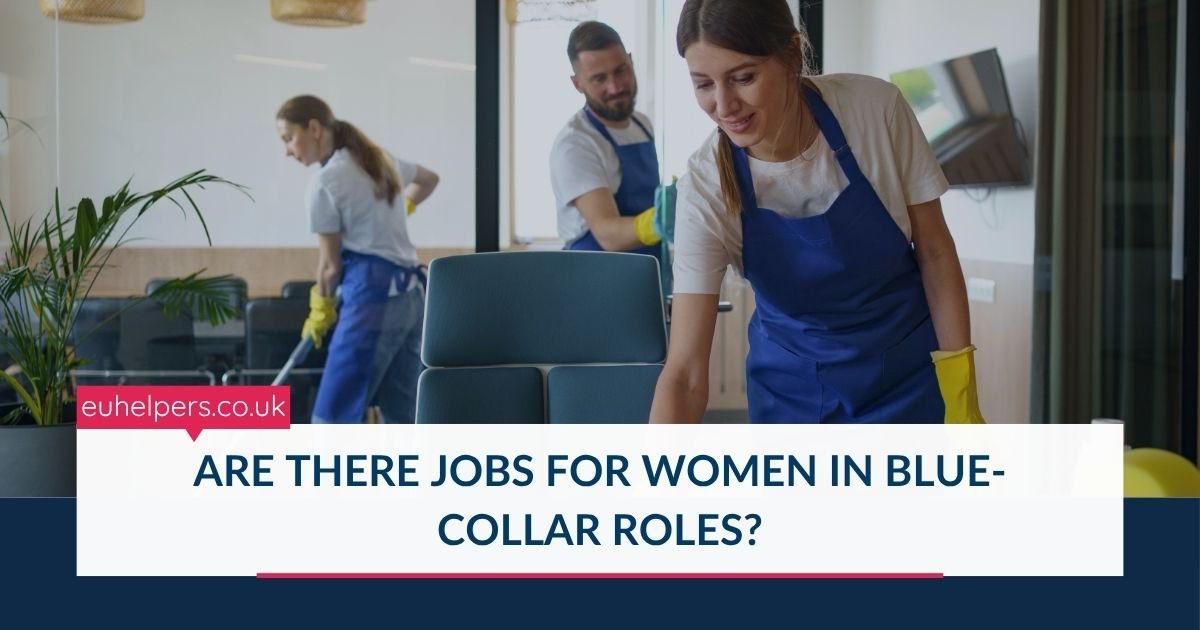
Many women from Asia, Africa, and other non-EU regions are exploring work opportunities in Europe. One of the most common questions is whether women can work in blue-collar roles such as warehouse operations, production lines, packaging, food processing, and similar fields.
The short answer is yes. European employers hire thousands of women each year for various blue-collar jobs across logistics, manufacturing, agriculture, hospitality, and assembly operations. These roles are safe, structured, and supported by strong labor standards.
Are There Blue-Collar Jobs for Women in Europe?
Yes. Women are actively hired in blue-collar sectors across Europe. Employers value female workers for their attention to detail, consistency, and efficiency in production and packaging environments. Many roles are specifically suitable for women because they involve light-duty tasks, indoor working conditions, and organized shift systems.
These jobs generally do not require heavy lifting and are designed to meet safety and comfort standards established by EU labor regulations.
Blue-Collar Jobs in Europe Suitable for Women
Women can apply for a wide range of positions, including:
-
warehouse picker and packer
-
sorting and scanning operator
-
labeling and quality control staff
-
production line operator
-
food processing and packaging worker
-
laundry and cleaning staff
-
housekeeping and hotel support
-
greenhouse and agricultural helper
-
garment manufacturing worker
Most of these positions offer structured training and are open to candidates without previous experience.
Which EU Countries Hire Women for Blue-Collar Roles?
Several EU countries regularly recruit women for warehouse and production jobs. These include:
Poland:
Large hiring demand in packaging, sorting, warehouse support, and food processing.
Lithuania:
Factories and logistics centers hire women for assembly and light production roles.
Czech Republic:
Known for electronics assembly, automotive parts production, and packaging.
Romania:
Active recruitment for garment, food processing, and electronics sectors.
Spain:
Many opportunities in conveyor line work, packaging, and agriculture.
Women from Nepal, India, Sri Lanka, Bangladesh, Vietnam, the Philippines, Kenya, Uganda, and other countries frequently work in these sectors.
Do Women Need Experience for Blue-Collar Work?
No. Most roles for women are entry-level and include on-the-job training. Fresh candidates who meet the basic requirements—physical ability, willingness to work in shifts, and basic communication skills—can qualify.
Experience may be needed only for specialized positions such as machine operators or forklift roles.
Are Blue-Collar Jobs Safe for Women in Europe?
Yes. EU labor laws require employers to provide:
-
safe working conditions
-
clean accommodation (when provided)
-
proper safety equipment
-
regulated working hours
-
paid leave and breaks
-
medical insurance (country-specific)
Many facilities have separate restrooms, break areas, and shared accommodation only for women.
What Are the Working Conditions?
Most blue-collar jobs for women include:
-
8–12 hour shifts (country-based)
-
indoor, temperature-controlled facilities
-
structured tasks
-
clear safety guidelines
-
opportunities for overtime
-
weekly or monthly salaries
Women often work in teams, and tasks are usually repetitive but easy to learn.
Salary Range for Women in Blue-Collar Jobs
Salaries vary by country, but women earn the same as men for the same roles due to EU equality laws:
-
Poland: €700–€1,000+ net
-
Lithuania: €900–€1,200
-
Czech Republic: €950–€1,150
-
Spain: €900–€1,100
-
Romania: €650–€900
Overtime, night shifts, and bonuses can increase monthly earnings.
Do These Jobs Lead to Long-Term Residence?
Yes. Once women receive a Temporary Residence Card (TRC) or a long-term work permit, they may become eligible for:
-
extended residence
-
employer change (per local rules)
-
long-term EU residency
-
family reunification (country-specific)
-
skill-based career growth
Many women build stable, long-term careers in Europe through entry-level jobs.
Conclusion
There are many blue-collar job opportunities for women in Europe, especially in warehouses, production lines, and packaging facilities. These roles are safe, well-regulated, and accessible to fresh candidates without experience. For women seeking stable income, legal employment, and a chance to build a long-term future in Europe, blue-collar work is a strong and reliable pathway.
EUHelpers continues to support women candidates by offering verified job opportunities, documentation guidance, and clear assistance throughout the work permit and visa process.